.png)
Pacing With Fibromyalgia & Chronic Pain (Science + Lived Experience)


Disclaimer
General information only not medical advice. If symptoms are severe, changing, or impacting your safety, please see a qualified clinician.
Pacing is one of those things that gets handed out as advice like its simple: just listen to your body.
And look sometimes that is enough.
But if you're living with fibromyalgia or chronic pain (especially with bonus features like ADHD, menopause sleep chaos, and stress), pacing is less a neat system and more a work in progress you keep renegotiating.
This post is the evidence-backed version plus the real-life version.
Quick takeaways
· Pacing is meant to reduce the boom/bust cycle, not shrink your life.
· The best-supported pacing approaches tend to use structure (time limits/quota goals), not do as much as you can on good days.
· Rotating task types can reduce flare load.
· Flexibility (Plan A/B/C) is part of pacing not a failure.
· Consistency beats hero days.
Pacing with fibromyalgia: what it actually means (and what it's not)
In chronic pain and fibromyalgia, pacing is meant to help you avoid the boom/bust cycle: doing heaps on a good day, then paying for it with a flare.
But pacing is not supposed to mean your life slowly shrinks until you’re avoiding everything.
A lot of the research points out that pacing gets defined and taught in different ways and outcomes can vary depending on whether pacing turns into avoidance versus a more structured, flexible approach that supports function and quality of life. (see References 12)
My real-life pacing baseline (and why it's still messy)
Fresh out of the fibromyalgia diagnosis gate, I did what many of us do: I researched pacing like it was my new part-time job.
I went deep into my smartwatch data HRV, activity, sleep and started tracking my energy envelope. I figured if I could just listen to my body and use those metrics as a baseline, I'd stay out of the flare zone.
And honestly? Most of the time, that works.
But there are a few things that make it genuinely tricky.
1) Menopause sleep chaos changes the whole game
When you're waking at 2:30 or 3:00am with a hot flush, weird dreams, and then your brain decides it's time to start the business day pacing becomes a different sport.
It's hard to run a nervous system on:
· Poor sleep
· Hormonal surges
· Menopausal rage
· And the general why are my clothes making me so angry today situation
2) The illusion of energy is a trap
Some days you feel fabulous and you get excited Like ‘oh yes! I feel exactly the way I used to, so much power, this must be me all sorted now, right?
And then you do far too much.
And then you pay for days.
That’s the boom/bust cycle in a cute outfit.
3) Exercise consistency is hard when your body's giving mixed signals
Even when you know movement helps, it's hard to keep exercise consistent when your sleep is rubbish, your HRV is low, and your calendar has other plans.
(Also: yes, my baseline food is pretty solid thank you, past Bek and that foundation matters. But food alone can't out-nutrition hormone chaos and sleep deprivation.)
The pacing techniques with the best evidence (and how to make them work)
1) Find your baseline and use time limits (not finish the task)
One of the more structured approaches to pacing uses quota-contingent goals meaning you set activity targets by time or amount, not by pain levels in the moment. (see Reference 2)
In real life, this can look like:
· 10 minutes of dishes instead of cleaning the kitchen
· Put laundry away for 15 minutes instead of finishing the whole basket
· One phone call instead of doing all the admin
The goal is repeatable effort without the crash.
2) Plan, prioritise, and rotate tasks
Pacing isn't only about stopping. It's also about how you arrange your day.
Rotating tasks can reduce flare load, especially if you mix:
· Sitting tasks
· Standing tasks
· Cognitive tasks
· Physical tasks
This is also where good enough options matter (seated version, shorter version, outsource version).
3) Consistency beats hero days
Pacing frameworks for chronic pain/fatigue explicitly target the overactivity/underactivity cycle. (see References 12)
The aim isn't perfection. It's keeping your activity more steady across the week so you're not constantly rebuilding from flare city.
4) Flexibility is part of the plan (not a failure)
Symptoms vary. Sleep varies. Hormones vary. Life varies.
So, pacing needs Plan A / Plan B / Plan C.
If you can only do the lying-down version today, that still counts.
5) Gentle progression (only when stable)
Some pacing approaches include progression, but the key is that its gradual and flexible, not push through because the plan says so.
If you're going to increase activity, change one thing at a time:
· Time, or
· Intensity, or
· Frequency
And only when your baseline is holding.
What I'm doing right now: calendar-block pacing (sitting / lying down / creative)
Where I'm at now is a routine that's simple enough to follow on most days, but flexible enough not to break me.
I time-block my day into three foundation blocks:
· Morning: Sitting block admin, paperwork, business bits
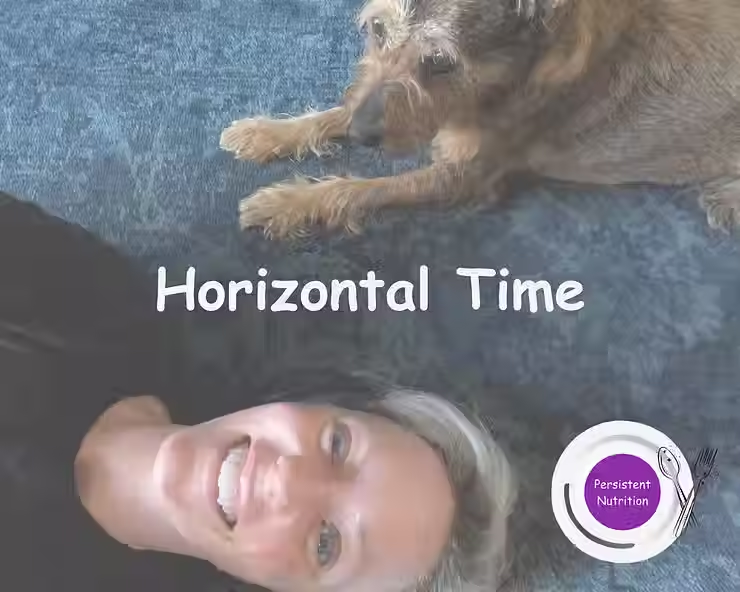
· Midday: Lying down block anything that can be done reclined (editing, networking, planning, meditation, low-stimulation tasks)
· Afternoon: Creative block content, sewing, ideas
They're not rigid. They're a foundation.
And yes, some days the ADHD brain takes the wheel, and I don't follow the blocks perfectly. Exercise drops off when appointments stack up. Life happens.
But the point is: the blocks help me return to baseline instead of free-falling into chaos.
If you're trying to pace and you're failing at it
If you're in that space where you're trying to implement routines and it's not perfect and you're fucking it up all the time, I want you to hear this:
· You're not stuck.
· You're not backsliding.
· You're not doing it wrong because it isn't flawless.
Pacing with fibromyalgia and chronic pain is hard. Add hormones, sleep disruption, ADHD, stress, and real life and it's a lot.
I'm here too.
If you want to join this crazy, really hard ride with me, you're welcome.
Want support building a pacing plan that fits your real life?
If you want help building a body-neutral plan that works with your symptoms, your sleep, your capacity, and your actual calendar, you can book a consult here:
More articles: https://www.persistentnutrition.com/blog
References
1. Activity pacing, avoidance, endurance, and associations with functioning in chronic pain (systematic review/meta-analysis): https://pubmed.ncbi.nlm.nih.gov/22728699/
2. Testing a newly developed activity pacing framework for chronic pain/fatigue (feasibility study; quota-contingent + flexibility): https://pmc.ncbi.nlm.nih.gov/articles/PMC8655535/
About Bek
Rebekah (Bek) Sutton is a nutritionist in Perth, Western Australia, specialising in chronic illness, neurodivergence, and trauma-informed care. Her work is evidence-based, body-neutral, and practical with a focus on helping people build routines that work in real life.
Copyright
Copyright @ 2026 Persistent Nutrition. Please don't repost in full without permission. Share the link instead.


Comments